
Upcoming Course Schedule
To check availability and to register, go to https://www.canboat.ca/course-calendar/
Boating Courses Offered in Ottawa, Kingston, & Brockville
Maritime Radio Certificate – ROC(M) teaches emergency radio procedures and everyday operating techniques. Learn all about the uses of marine radios, choice of frequencies, operation, phonetic alphabet, procedural words and phrases, as well as Digital Selective Calling and the Global Maritime Distress and Safety System, (DSC/GMDSS). All mariners, including recreational boaters, will want to take advantage of the many features and capabilities of this innovative form “automatic” radio. Secure your lifeline. Be sure that you and your family take the Maritime Radio course. This complete package will prepare you for the Restricted Operator Certificate (Maritime) with DSC Endorsement exam which is included as part of this courses. To operate a maritime radio, you need the certificate. It’s the law!

Basic Navigation – Online. Learn the fundamentals of traditional and electronic navigation, including navigation using paper charts and electronic devices (e.g., a chart plotter and app-based software). Each section includes course notes, which can be downloaded electronically or printed in booklet format, instructional videos, skill-testing quizzes and practice exercises, and links to supplementary resources, including web-based links and videos related to each topic. Participants must complete the cruise exercises with a chartplotter or tablet/phone navigation app. The course provides options for purchasing apps starting at $14.00. The course, which can be taken online/virtual or in a classroom (where available), is 8 to 9 weeks in length (at the discretion of the instructor team). A final exam is also available.
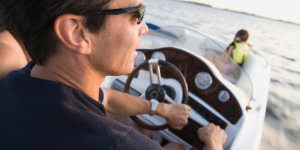
Boat Handling – Online. Learn the fundamentals of boat handling and safety techniques, including skipper and crew responsibilities, preparing for departure, handling emergencies, anchoring techniques, lines and knots, docking and undocking techniques, marine weather, collision avoidance rules, and tide and current tables. Each section includes course notes, which can be downloaded electronically or printed in booklet format, instructional videos, skill-testing quizzes and practice exercises, and links to supplementary resources, including web-based links and videos related to each topic. The course, which can be taken online/virtual or in a classroom (where available), is 7 to 8 weeks in length (at the discretion of the instructor team). A final exam is also available.
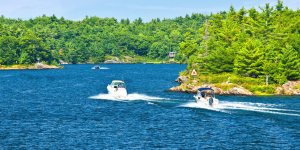
Seamanship & Coastal Navigation (Boating 4). This course will increase your confidence by focusing on the manual navigation technique called Dead Reckoning followed by logbook protocols. This is followed by a review of fixed and floating aids and more detailed navigational techniques. Other chapters will increase your knowledge of environmental influences on the marine environment: Tides and Currents, Weather, and Wind and Waves. Still other chapters are devoted to specific procedures to follow when things go from bad to worse: skills for boating handling during adverse weather, managing emergencies, and coordinating rescue efforts with the Coast Guard. Finally, you must demonstrate your proficiency in tying various knots and splices. The exam includes an extensive quiz section and charting/cruise exercise testing you understanding all topics covered in the course.
Practical Weather for Boaters will improve your understanding of the systems that cause weather. It will help you use forecasts more intelligently and to augment forecasts with local observations. This will improve your decision making. It will help you develop keen judgments in “reading” the sky and sea for optimum boating safety in and around Canadian waters. Each section includes a manual (e-copy), instructional video, quiz/exercise activity, and links to supplementary resources.
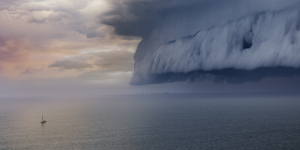
 CanBoat / NautiSavoir Rideau District